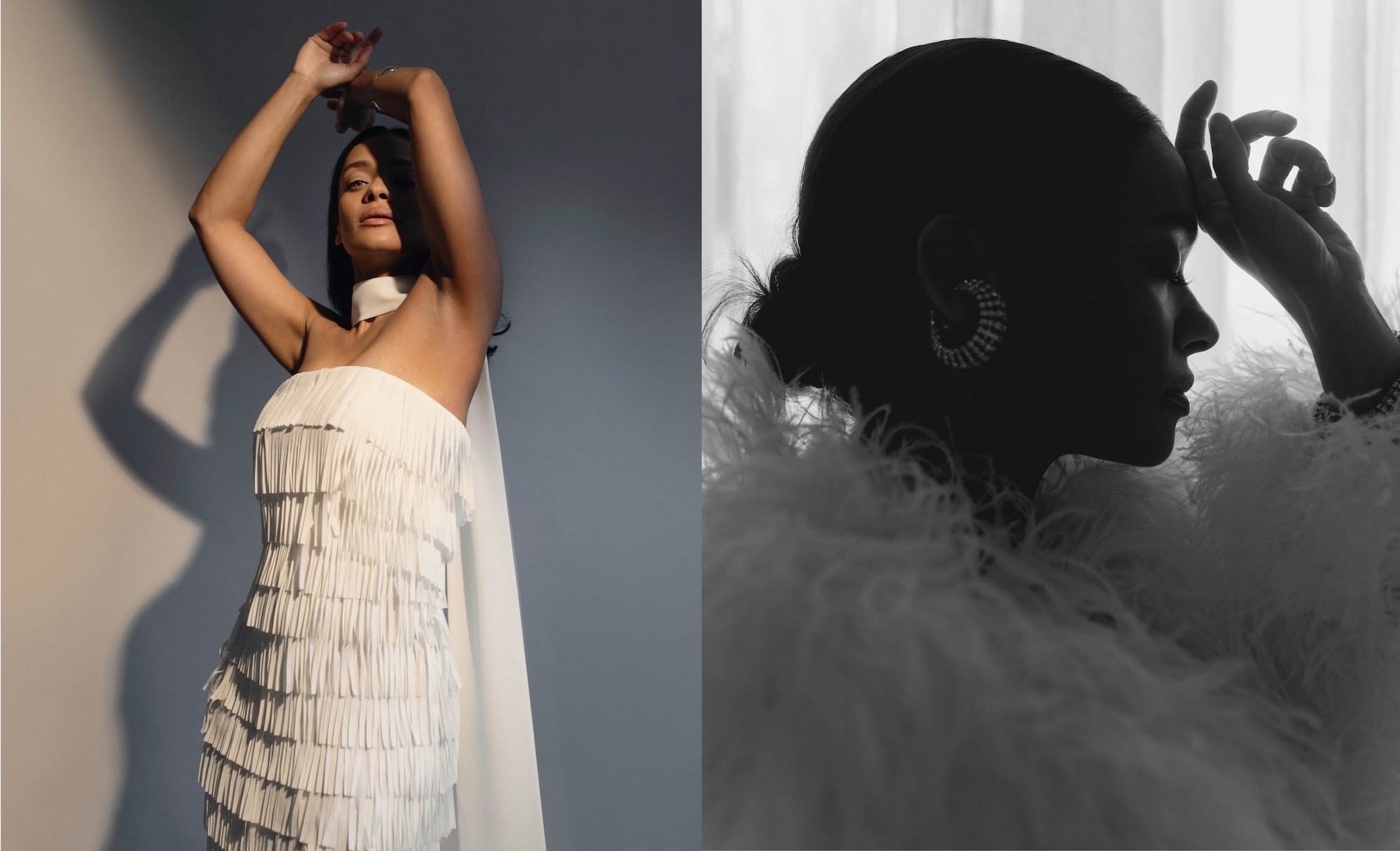
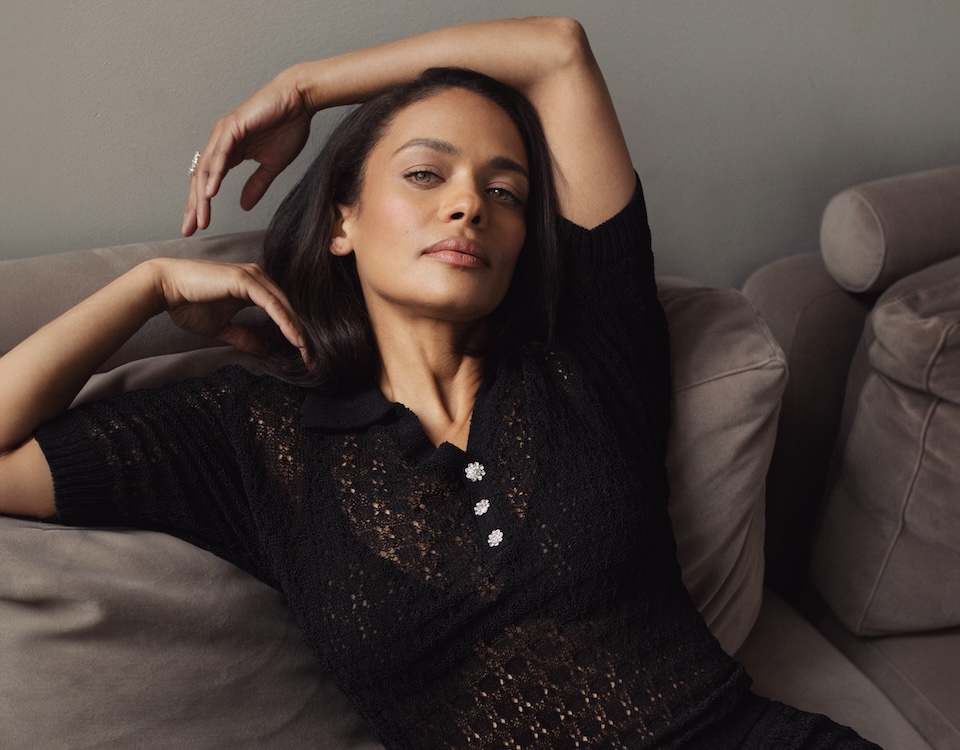
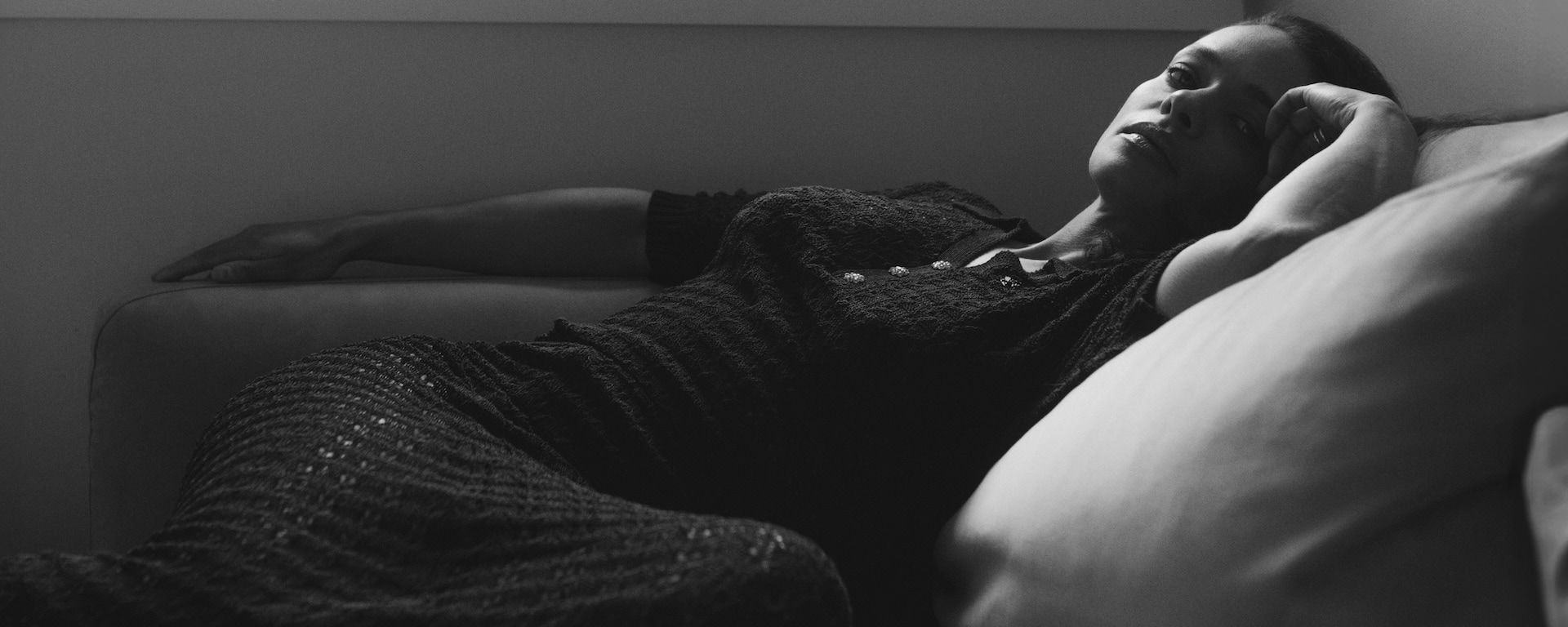
KANDYSE MCCLURE AND THE CHOICE TO STAY

For her, staying present has always mattered more than moving fast. From Battlestar Galactica to Virgin River, her work reflects quiet choices, steady rhythms, and a life built on intention rather than urgency.
PHOTOGRAPHY BY LIZ ROSA
STYLED BY HEYENNE HOFFMAN / HAIR & MAKEUP BY THUY DINH

“YOU CAN CHANGE YOUR LIFE AT ANY POINT YOU CHOOSE. YOU’RE NOT LATE. YOU’RE NOT BEHIND. THE COMMITMENT THAT MATTERS MOST ISN’T TO A CAREER PLAN. IT’S TO YOURSELF.”
KANDYSE MCCLURE, ACTRESS
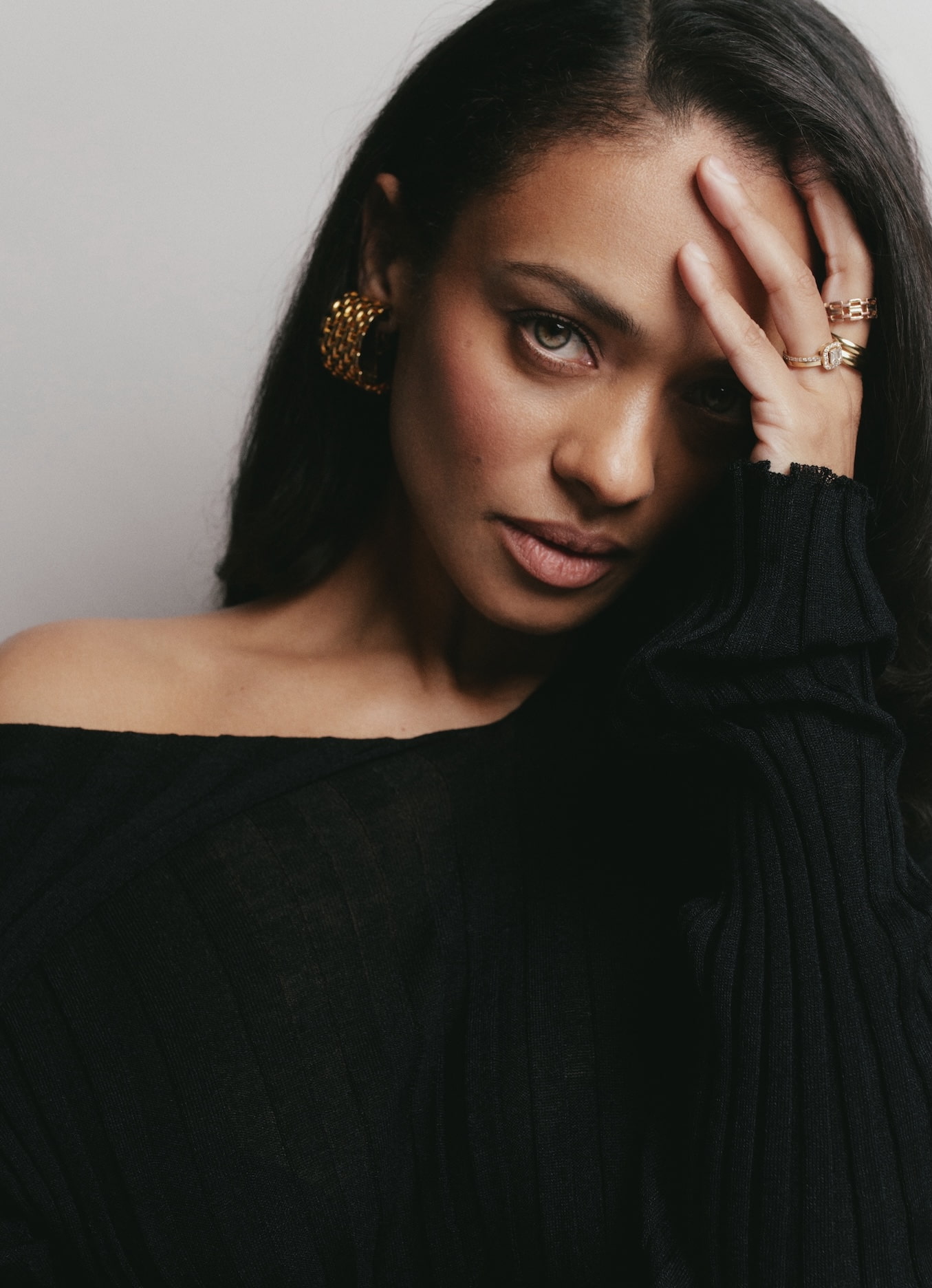
Kandyse McClure has built a life and career by staying. Not staying visible for visibility’s sake but staying present. Staying committed. Staying rooted in her craft, her values, and a way of living that doesn’t require urgency to feel meaningful.
Her work has unfolded steadily over time, shaped by consistency rather than spectacle. From the cultural imprint of Battlestar Galactica to the darker edges of Hemlock Grove, and now as a series regular on Netflix’s Virgin River, Kandyse has gravitated toward stories that center responsibility, resilience, and care. Her characters often arrive not to dominate a room, but to hold it together. There is strength in that choice. And intention. It is a way of working that resists urgency. A quiet commitment to presence rather than spectacle.
Settled in British Columbia, close to land and routine, Kandyse lives in rhythm with her work rather than in pursuit of it. Her life reflects the same grounded energy she brings onscreen: patient, thoughtful, deeply considered. This is not a career shaped by reinvention for its own sake, but one sustained by devotion — a quiet commitment to returning, continuing, and building something meaningful over time.
What sets Kandyse apart isn’t just the longevity of her work, but the way she has remained herself within it. She has moved through an industry known for its churn without disappearing, without hardening, without losing her center.
That kind of endurance doesn’t announce itself. It reveals itself slowly, through choices made again and again. Through the decision to remain present in a world that often rewards noise over steadiness.
“I’M MORE INTERESTED IN THE WOMAN WHO HOLDS EVERYTHING TOGETHER QUIETLY—THE ONE WHO SHOWS UP, WHO STAYS, WHO DOES THE UNGLAMOROUS WORK OF CARING.”
You’ve built your career by staying committed rather than constantly chasing the next thing. What has that approach taught you about yourself over time?
It’s taught me that commitment isn’t the opposite of freedom — it’s actually what makes freedom meaningful. In my twenties, I was convinced I was running out of time. I thought if I hadn’t “made it” by thirty, the window was closed. That belief kept me chasing — the next audition, the next city, the next version of myself that might finally be enough. And it was exhausting.
What I know now, almost three decades into this career, is that the best things came when I stopped running. I went through a season in my life where I stepped away from acting entirely, moved to a different country, and had to rebuild from scratch. I lost a lot. But that experience taught me something I couldn’t have learned any other way: you can change your life at any point you choose. You’re not late. You’re not behind. The commitment that matters most isn’t to a career plan — it’s to yourself. Everything I have now — “Virgin River,” the love in my life, the peace I feel — came after I thought it was all over. So, staying committed, to me, means trusting that the story isn’t finished yet.
Many of the characters you’re drawn to carry responsibility and care rather than dominance. What do those roles allow you to explore that louder stories don’t?
They let me explore what strength actually looks like when nobody’s watching. I think our culture is obsessed with theloud version of power — the big speech, the dramatic entrance, the person who commands the room by force. And those stories have their place. But I’m more interested in the woman who holds everything together quietly—the one who shows up, who stays, who does the unglamorous work of caring. There’s a leadership that comes from care andsteadiness, not volume. That’s what I try to bring to every role, and it’s what draws me to characters who lead the same way.
Living in British Columbia, close to land and routine, seems to support the way you work and live. How does that sense of place shape your creativity and your capacity to stay grounded?
I was born in Durban, South Africa, and my family brought me to Vancouver when I was small. I’ve moved back and forth, left, came back, left again — at one point, I moved to Trinidad to try and build a life there. But I keep returning to BC. And at a certain point, I had to stop treating it like a place I was passing through and start treating it like home.
What grounds me here is the land, literally. I’m a gardener. My hands are in the dirt more than they’re in front of a camera, and I’m not exaggerating by much. I love the idea that you can put something in the soil, nurture it, and create food or medicine from it. There’s something about that process that resets my entire nervous system. I believe deeply insoil and food security — it’s not just a hobby for me, it’s a value. And cooking is the other half of that equation. If I’vegrown something and I can cook it? That’s the best day. My scientific brain loves the puzzle of it — what can I make from what I have on hand, how do I work around dietary restrictions, what happens if I throw this random thing in? It’s instant gratification and creativity. Between the garden and the kitchen, I have everything I need to feel like myself.
The world of Virgin River is built around care, continuity, and connection. What about that pace of storytelling resonates with where you are in your own life right now?
It mirrors it almost perfectly, which is probably why I feel so at home on this show. I’ve lived a life that was not slow. I’ve moved countries, rebuilt from nothing, gone through a marriage that broke me down, and a period where I genuinely wondered if I’d ever work again. So, when I stepped into the world of “Virgin River” — this small town where people know each other, look out for each other, and where life moves at a pace that lets you actually feel it — something in me exhaled.
I’m in a different place now. I got married last year to someone I’ve loved since I was young. I’m on the longest-running original show on Netflix. And I’m finally in a chapter where I don’t need the drama to feel alive. That’s what “Virgin River” gets right — it says that a quiet life isn’t a small life. Connection, community, choosing to stay — those are enormous acts of courage. And I feel that in my bones right now.
Is there a moment in your day when things slow down and you feel like yourself again?
Morning. Before my phone starts telling me who I need to be. I make coffee — the slow kind — and I just sit on the balcony, stare at the sky, check on the plants, the soil. Sometimes I’ll pick up my ukulele and play a little; that’s its own kind of meditation. Though I’m definitely no professional — I sing with more feeling than technique — but my father is a brilliant self-taught musician, and playing connects me to him and to a part of my family that music has always run through. Then I write a bit, to get all the words out of my head, a clean slate for a new day. So yeah — early morning, coffee, maybe some very questionable ukulele, my journal, my plants. That’s a few minutes where I’m not an actress, not anyone’s colleague. I’m just me. I guard that time fiercely.
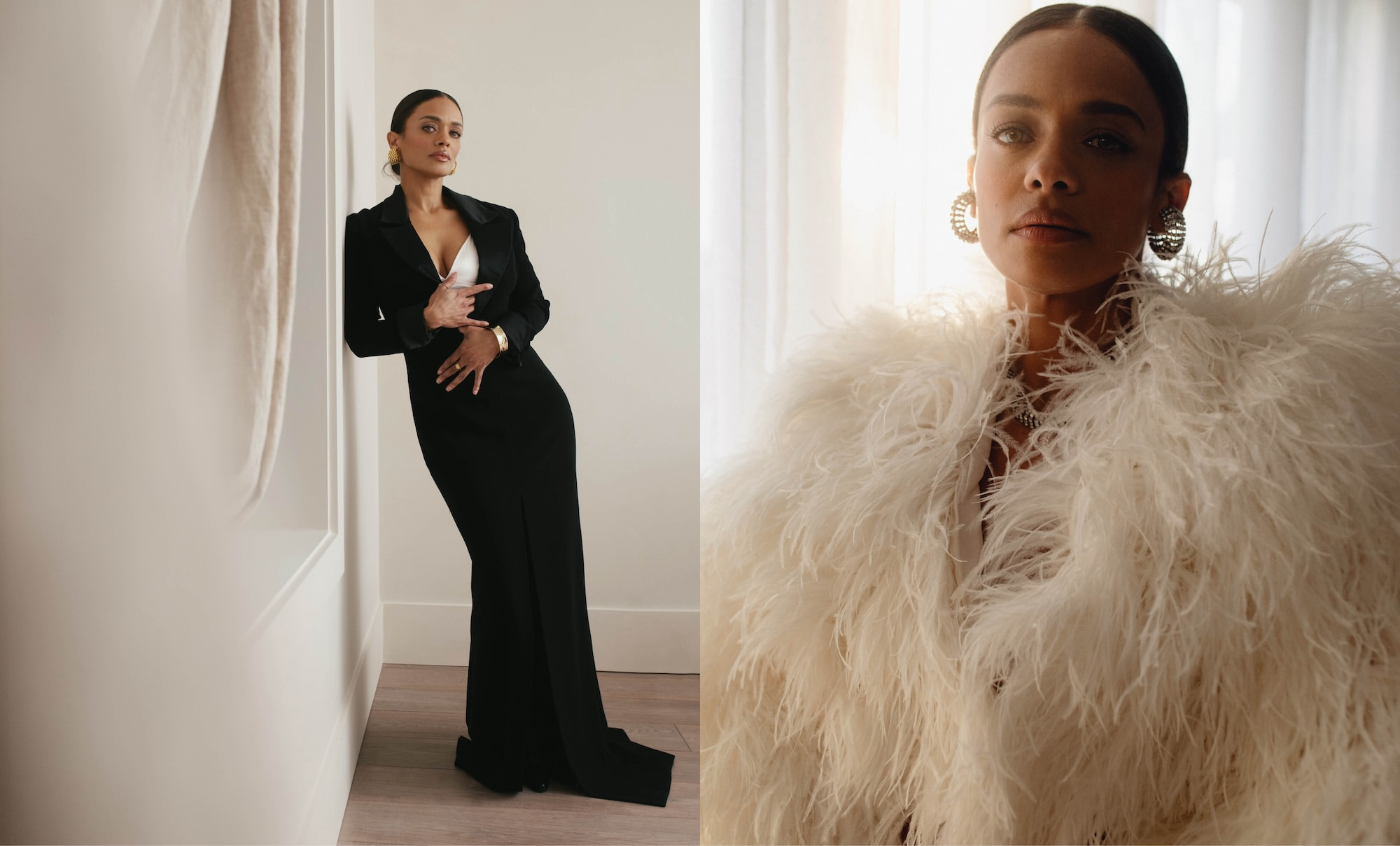
“THERE’S A LEADERSHIP THAT COMES FROM CARE AND STEADINESS, NOT VOLUME.”
Has your relationship to beauty changed over time, not just how you look, but how you care for yourself?
Completely. In your twenties, so much of beauty was external — how do I look, how do I photograph, am I enough for thisroom? And this industry will happily keep you on that treadmill forever if you let it. Then I went through a period in my lifewhere I lost nearly everything. Not just career-wise, but personally. I had to move back in with my mom and figure out how to start over. And when you’re rebuilding from that place, beauty becomes something else entirely. It becomes: Did I sleep? Did I have a healthy meal? Am I hydrated? Did I get outside? Did I connect with a friend or loved one? Those became my beauty rituals, and honestly, they still are. Now, taking care of myself means protecting my energy, doing things that keep me healthy and strong, being around people who are on the same wavelength, eating well, and having my time belong to me entirely. The more I stopped performing beauty, the more beautiful I actually felt. I think a lot of women arrive at that shift around this age, and it’s one of the most freeing things that’s ever happened to me.
Do you think differently about purpose now than you did earlier in your career in both work and life?
Night and day. When I was starting out, purpose was a destination. Book the series. Get the part. Prove you belong. And I did those things, and they were wonderful, but they didn’t answer the question I thought they would. Purpose, I’ve learned, is a practice. It’s daily. It’s in how you treat the people on set, how you show up for the work even when no one’s watching, how you tend your garden and feed the people you love. My mother taught me that. She is an absolute force of nature — more energy than I could ever hope for — and she will always tell me the truth and alwaysbelieve in me. If I can accomplish a fraction of what she has, I’ll be happy. We have these deep philosophical conversations or just laugh at our little inside jokes, sometimes in the same ten minutes. That’s the purpose for me now. It’snot a title or a credit. It’s showing up for the people and the things that matter, consistently, even when it’s ordinary, especially when it’s ordinary.
For a woman reading this who’s trying to build a life she can stay in, what do you think actually matters in the long run?
Knowing the difference between what looks good and what feels good. That sounds simple, but it took me years and some very painful lessons to figure out.
I built a life that once looked good. From the outside, it was fine. But it was destroying me from the inside. And when it fell apart, I found myself starting over, wondering if I’d wasted everything. I hadn’t. I just hadn’t learned the lesson yet. The lesson is: build around what restores you, not what impresses people. For me, that’s been choosing to live in a city Ilove rather than one the industry says I should live in. It’s been saying yes to a show like “Virgin River” that values consistency over spectacle. It’s been tending gardens, feeding my friends, keeping that circle tight, following what feelslike play and lightness in my life. And it’s been letting love back in when I had every reason to keep the door shut.
The long game is about being able to look at your life and think, “I actually like being here.” Not because everything is figured out — it absolutely is not — but because the foundation is something you chose on purpose. You can change your life at any point. I’m living proof. The best chapters don’t always come first.