

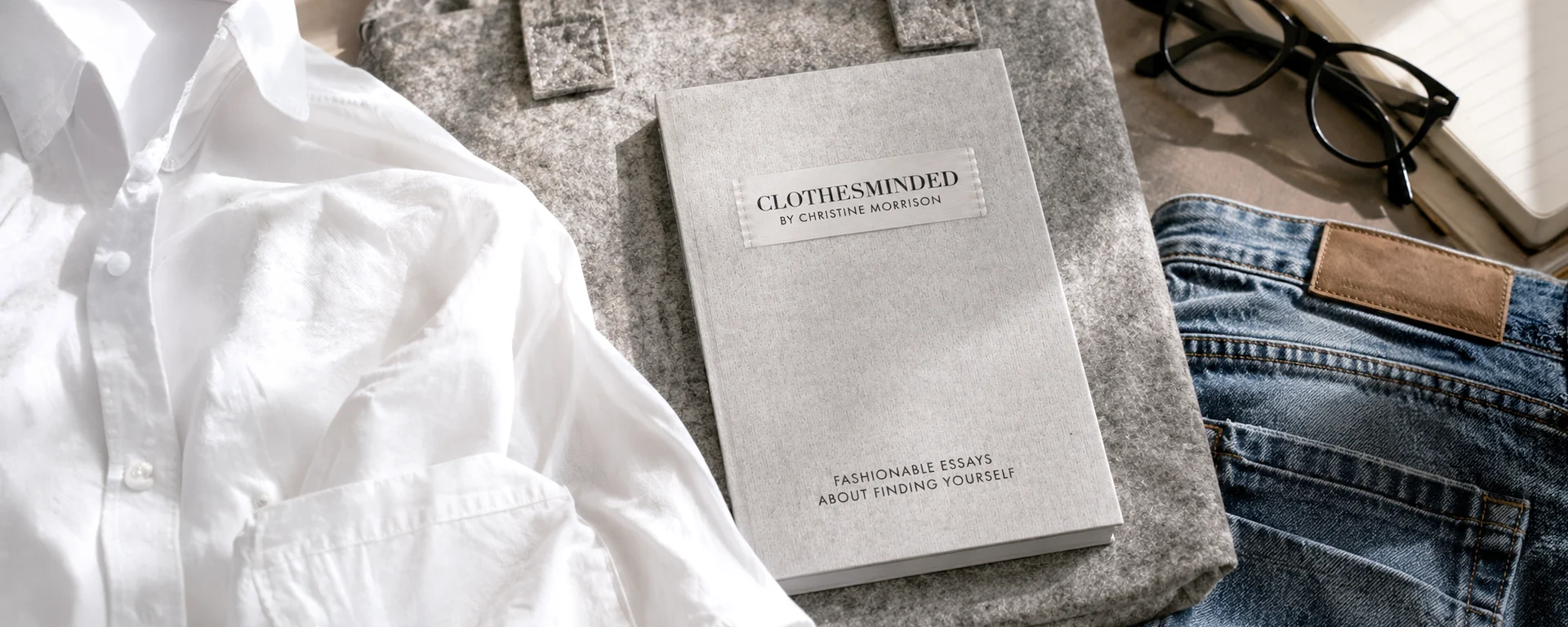
WHAT WE WEAR WHEN LIFE CHANGES US

In Clothes Minded, Christine Morrison traces a life through the garments that held her, through ambition, loss, reinvention, and the quiet evolution of self.

“WHEN WE DON’T HAVE ANSWERS, WE CAN STILL CHOOSE HOW TO SHOW UP. AND SOMETIMES THAT’S ENOUGH TO CARRY YOU THROUGH.”
CHRISTINE MORRISON, JOURNALIST, WRITER, AND CREATOR OF WRITING IN BLACK AND WHITE

There is a quiet moment when something in your life no longer fits. It isn’t dramatic, and it rarely announces itself. It shows up in small ways—in what you reach for, in what you hesitate to wear, in the subtle awareness that who you are has shifted, even if the world around you has not yet caught up.
In her book Clothes Minded: Fashionable Essays About Finding Yourself, journalist and author Christine Morrison explores identity, memory, grief, and reinvention. Each chapter is anchored in a garment or a brand, but what unfolds is far more personal: a life traced through ambition, loss, and the steady evolution of self. The clothes are not the focus. They are the markers—evidence of who she was, what she carried, and what she was learning to release.
There is no urgency in her writing, no need to declare transformation. Instead, Morrison offers something quieter and more enduring: a record of change as it actually happens. Through early career years shaped by expectation, through moments of grief and uncertainty, through the recalibration that comes with time, she returns again and again to a simple truth. What we wear often reveals what we are still trying to understand.
What lingers is not the fashion but the recognition. Because at some point, we have all stood in front of our own lives and realized, with a kind of quiet certainty, that something has shifted—and that we are learning, piece by piece, how to meet ourselves there.
“CLOTHES WERE FAR MORE THAN SELF-EXPRESSION. THEY HELPED CARRY ME THROUGH THE YEARS.”
SHORT PASSAGE FROM CLOTHES MINDED
Personal style tells a story, but it’s never the whole story. It’s merely the wrapping paper, the fold, the tape. The real gift is who we become while deciding what to wear. My silhouette no longer speaks solely for me, but my clothes still tell my story.
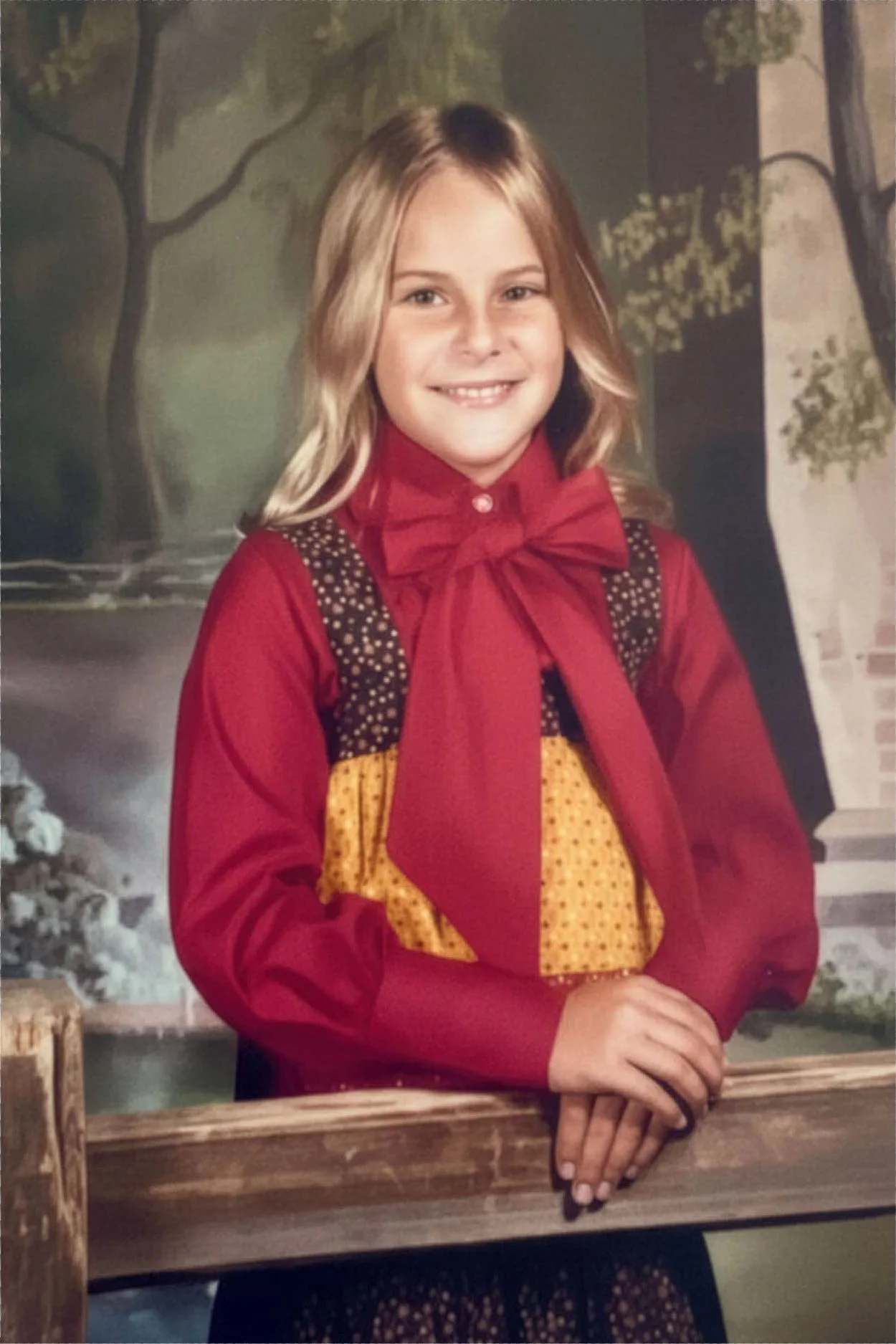
Christine Morrison as a child, already experimenting with personal style.
You write about moments where clothing offered a sense of control during uncertainty. Do you think we underestimate how much we rely on what we wear to steady ourselves?
I think we do, because we’re taught to see clothing as frivolous. But in moments of uncertainty, it becomes something else entirely—what you wear can ground you and provide both physical and emotional comfort when everything else feels unsteady.
I write about several of those moments in the book, including losing my father, a miscarriage, and being diagnosed with epilepsy later in life. There is a quiet reassurance in getting dressed. When we don’t have answers, we can still choose how to show up. And sometimes that’s enough to carry you through.
There’s a thread of independence throughout the book, choosing yourself even when it’s difficult. Did that clarity come gradually, or was there a defining moment?
As a self-professed late bloomer, it took time for me to come into my own, but it was never at the expense of my independence. I owe that to great role models—my mother and grandmother in particular—who taught me at a young age to listen to my intuition and to pursue big dreams.
Choosing myself wasn’t always easy, in love or in career, and I’m sure I made mistakes along the way, but I wouldn’t have had it any other way. They led me to who I am today.
What feels essential to you in this season, what are you choosing to keep, and what are you no longer holding onto?
What feels essential now is joy and peace, which come from the wisdom of aging. I just turned 57, and I know what matters. And, more importantly, what doesn’t.
I’m holding onto what feels true: loving, reciprocal relationships, meaningful work that offers a creative outlet, and clothes that reflect who I am today. I’m letting go of the rest: the pressure to perform, to be perfect, and, most of all, to fight aging.
Your book uses clothing as a way to trace a life. When you look back now, what do you feel those pieces were quietly holding for you that you couldn’t yet name?
Everything represented a sense of becoming, and much like every girl growing up, fashion was a process of trial and error in identifying who I was striving to be. So much of what I wore embodied my aspiration and grit: for a successful life in New York City, as Vice President at Calvin Klein, and in becoming a mother of twins. There was also protection in it. It was armor during times of grief and loss.
Looking back as I wrote this book, I can now clearly see that clothes were far more than self-expression. They helped carry me through the years.
There’s a quiet restraint in how you write about loss and change. Was that a conscious choice to let meaning emerge rather than declare it?
While I didn’t want to shy away from vulnerability or being open about what I experienced, I did choose a quieter restraint that felt true to me and honored the weight of those moments. I’ve learned that this approach has also allowed readers to reflect on their own journeys through the story.
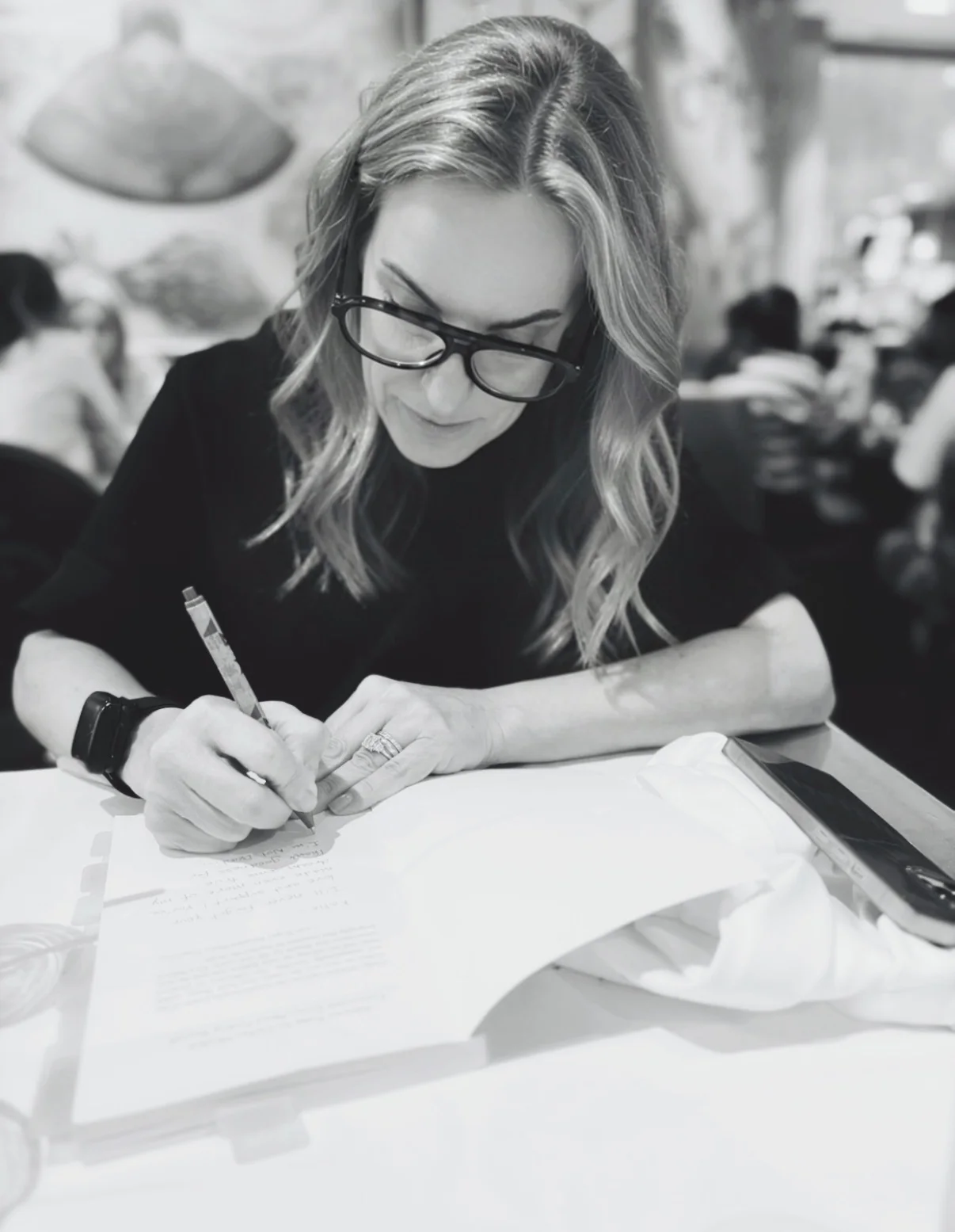
Christine Morrison signing copies of Clothes Minded.
“WHAT I WEAR REFLECTS THE LIFE I’M ACTUALLY LIVING, NOT ONE I’M STILL EAGER TO CREATE.”
Many women are taught to dress for who they’re expected to be. When did you begin to trust your own reflection instead?
I learned at an early age that fashion signaled something about you, and I wanted to take control of that narrative. I experimented with color, pant cuffs, unique school shoes, ties on blouses, and all things preppy before I even reached middle school, thanks to influential women’s magazines and The Official Preppy Handbook.
But as I got older, I found myself boxed in more often by rules and trends, until I arrived in New York City just before turning 30. It was then that I stopped caring and truly found my style, which brought me the greatest confidence and the freedom to explore who I was becoming.
You move through ambition, relationships, health, and identity with a sense of continuity rather than rupture. What helped you stay connected to yourself through those shifts?
I always felt the shifts were interconnected, and I needed to pay attention to them as there would be a domino effect. In a way, writing became a thread that kept them intertwined. It allowed me to work through what was happening while staying curious and open to change. I’ve learned that if I remain grounded in who I am and in my values, evolving feels exciting rather than unsettling.
Was there a moment when you realized that what once fit, emotionally or physically, no longer did? How did you respond to that growing awareness?
There were several pivotal moments when this realization hit. My epilepsy diagnosis was deeply emotional, while postpartum after having twins, and losing the triplet, was both emotional and physical.
In both cases, I leaned heavily on what I wore to regain my sense of self. During my epilepsy diagnosis and hospitalization, and then returning to work at Calvin, I clung to my structured uniform, particularly crisp men’s white shirts (even in my hospital bed).
Postpartum was entirely different. It felt like a fashion free-for-all because I had shape-shifted physically and emotionally. Within a year, I had left my job at Calvin and New York City, gotten married, and become the mother of twins. I no longer knew what fit because I was no longer the same person. I gave myself grace for rediscovery and was grateful for brands like J.Crew, which helped me find my way back.
What does getting dressed mean to you now, compared to the earlier chapters of your life?
It’s much simpler now, and not because I love fashion any less.
Decades ago, getting dressed was about defining and projecting the person I was striving to become into the world. Now, it feels more like alignment. What I wear reflects the life I’m actually living, not one I’m still eager to create. Because of this, my closet is more edited than ever. I rely heavily on my urban uniform (so many white men’s shirts!) and shop less than I ever have. There’s no dopamine rush to acquire the latest “must-haves,” no need for performative purchases, and an incredible ease in who I am, no matter what I’m wearing. Yet you can still find me watching runway shows and digging into the fall fashion issues of magazines. I’m likely paying as much attention to how aging women are represented on the runway as I am to the fashion.
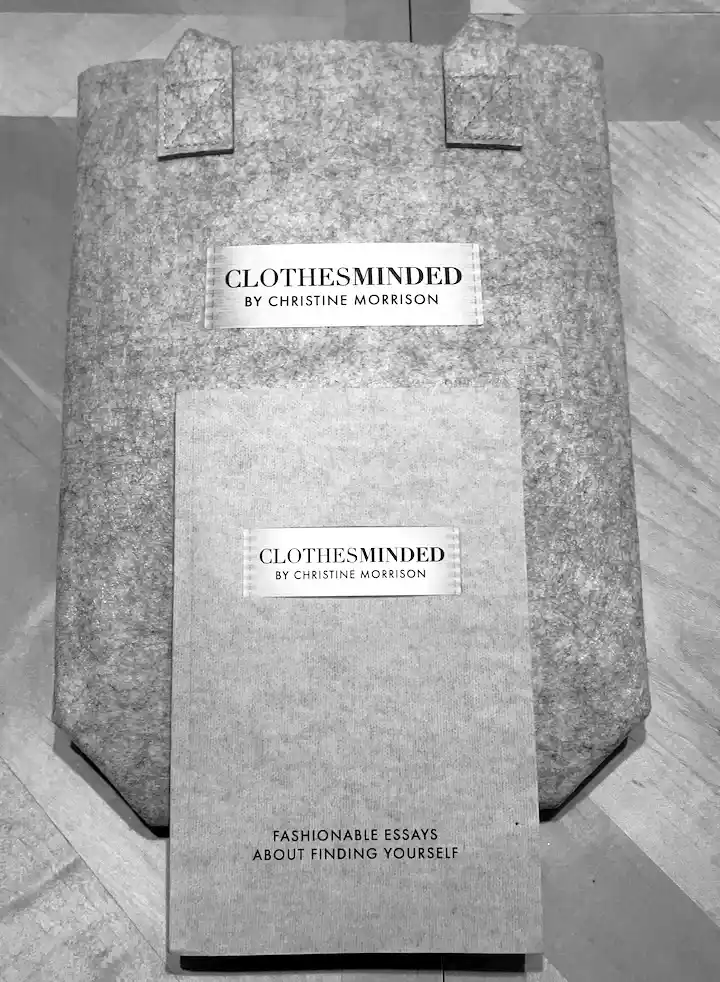
Clothes Minded: Fashionable Essays About Finding Yourself
is available in paperback on Amazon.com and Bookshop.org, and as an eBook exclusively on Amazon.com