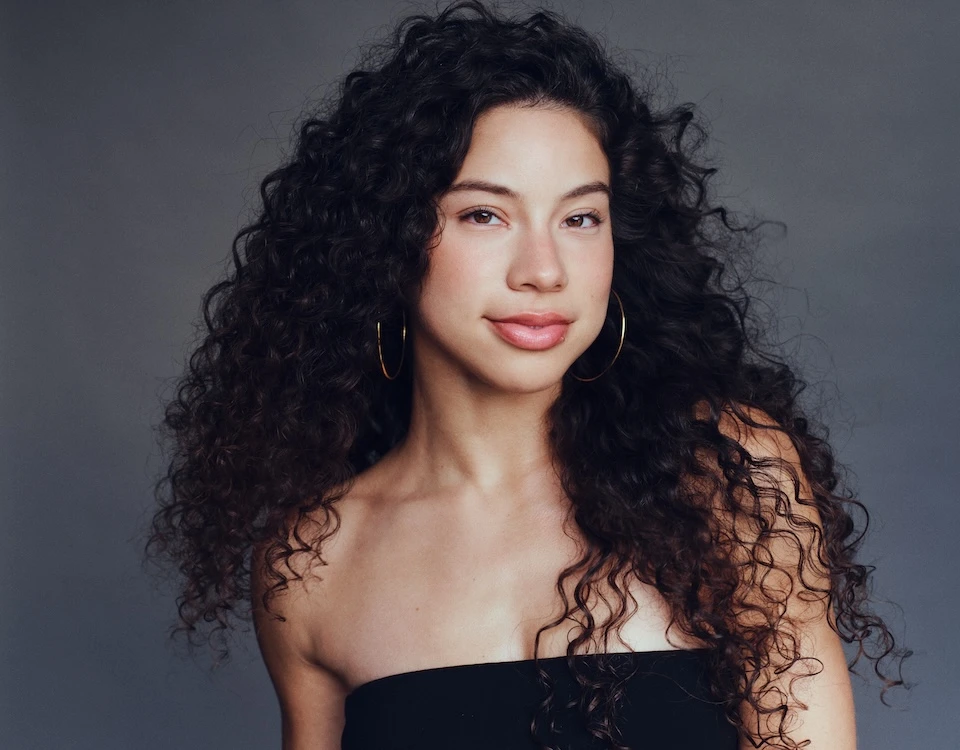
ALEXANDRA METZ DOESN’T SOFTEN THE TRUTH

She commands the screen as Dr. Yolanda García in The Pitt, but Alexandra Metz is doing something quieter and more powerful—reshaping what strength, authority, and presence look like when they no longer ask for permission.
PHOTOGRAPHY BY MARIPOSA PICTURES

“IF WE DEFINE OURSELVES BY TRAUMA, WE RISK NEVER MOVING BEYOND IT.”
ALEXANDRA METZ, ACTRESS
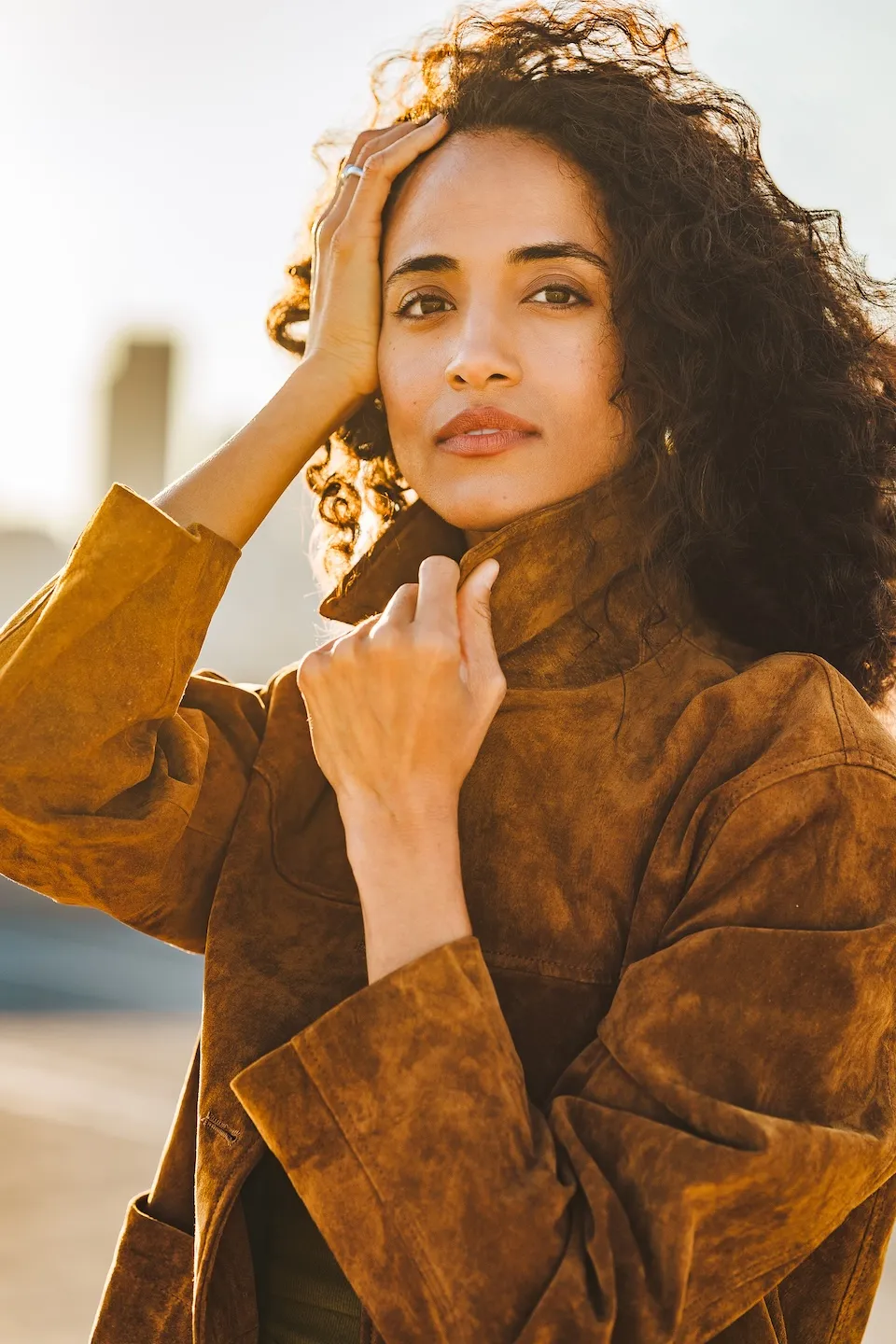
Alexandra Metz doesn’t just command the room on screen. Off camera, she moves through life with clarity and a kind of quiet intention. Her path hasn’t followed a straight line. It has unfolded over time, shaped by contrast, by choice, and by a willingness to change direction when something deeper called her forward. She grew up between New York City and upstate, moving between energy and stillness, and for a time pursued medicine before ultimately choosing the arts. What emerges from that is a grounded awareness—shaped by reflection, resilience, and an unwavering sense of self. We spoke with her about identity, mentorship, healing, and what it means to take up space unapologetically.
In The Pitt, Alexandra Metz steps into the role of a surgeon, and she holds the room. As Dr. Yolanda García, a trauma specialist navigating the emotional aftershocks of a mass shooting, her performance carries a precision that feels both controlled and deeply felt. Now in its second season, the series allows García to exist within a tension many women know well. It’s the space between authority and vulnerability, between what is carried publicly and what is processed in private, without ever asking her to soften what truly makes her formidable.
Metz has built a body of work that reflects both range and restraint. With appearances on series such as Grey’s Anatomy and Once Upon a Time, she has moved through roles that require emotional precision and adaptability, quietly developing a presence that resists easy categorization. There is a consistency in her choices—an interest in complexity, in women who are not reduced to a single note. Each role feels less like a performance and more like a continuation, a deepening of something she has been shaping all along.
There is something quietly radical in that. In a landscape where Latina characters have so often been shaped by limitation, Metz offers a different inheritance. García is not defined by struggle alone, but by expectation—by a lineage of excellence, by an internal certainty that does not require explanation. She does not ask to be understood. She simply is. And in that, she shifts the center of power.
Off-screen, that same sense of intention remains. Raised between New York City and upstate New York by a Panamanian mother of Caribbean and Colombian descent, Metz grew up within contrast—between pace and stillness, visibility and distance. That duality sharpened her awareness early on, shaping the way she moves through both her work and the world. There is a thoughtfulness to her, an attentiveness to what lives beneath the surface.
Before acting fully claimed her, she was accepted into Brown University’s prestigious Program in Liberal Medical Education, a path rooted in discipline, structure, and care. That foundation still echoes in her work—in the way she approaches character, in her understanding of the body and the systems that hold it. Nothing feels accidental. Everything is considered.
As her presence continues to expand, Metz is not simply reshaping representation—she is refining it. Bringing nuance to spaces that have too often relied on familiarity, she offers something more exacting in its place. Not louder, but more certain. Not performed, but fully lived.
Alexandra Metz moves through the world with a clarity that is rare, a presence that is intentional, and a voice that is unwavering. Her journey, shaped by reflection, courage, and care, is something she shares with us—a reminder that sometimes the most radical act is simply showing up fully as yourself.

“MY STRONG FEELING IS THAT WE ARE HERE TO LOVE AND LEARN DESPITE THE UNFAVORABLE EVENTS LIFE WILL UNDOUBTEDLY
DISH OUT.”
You’ve talked about growing up in environments that required resilience early on. How do you think those experiences shaped who you are, not just as an actress, but as a woman moving through life and career?
Challenging environments have taught me to deeply appreciate my freedom, my safety, and the choices I have made to double down on my thoughts about life and my strong feeling is that we are here to love and learn despite the unfavorable events life will undoubtedly dish out. Also, knowing that I have survived some hairy environments gives me the courage to overcome the hardships that come my way, including those inherent in a career that can often be difficult to navigate.
You grew up between New York City and upstate New York, which are two very different worlds. What did that contrast teach you about yourself?
It taught me that I am a Gemini through and through. I love contrast and finding things to appreciate in disparate experiences. It also taught me that I love exploring, something I can do both in the mountains among the trees and in the wilderness of city streets.
Being raised by a single mother shapes you in ways that go beyond words. What is something you carry from her, not just what she said, but how she lived?
My mother lived with the fervent belief that no matter the bigotries or battles she faced, there was a higher power that would always have her best interests in mind. She was also never afraid to ask people how to access the various resources that abound in this nation. This taught me that it never hurts to ask. The way she moved through life was fueled by her desire to give her daughters every opportunity to excel despite the challenges she knew life would inevitably present. This showed me the importance of having a personal WHY when pursuing anything in life, especially anything arduous.
There was a time when medicine offered a more structured, certain path. What did choosing the arts teach you about stepping into the unknown?
Well, even though I knew I was stepping into the unknown, there was a certainty present in my heart because I felt safe in a community of like-minded people who prioritized art and the healing power of storytelling. That healing is what anchored me when choosing to step into the unmoored nature of an arts-led life. There is also an inherent magic to be discovered in the unknown, and that is part of the excitement of not being on a more structured path.
Softness and strength exist side by side in you. When did you first realize those two things could coexist?
Again, I am a Gemini! But also, growing up, I loved watching pro tennis and had the pleasure of witnessing the Williams sisters change the game. These young women exhibited both qualities. The sweetness and softness with which they spoke in interviews existed in tandem with their fierce power on the court. Venus and Serena taught me from a young age that we women contain beautiful multitudes.
In The Pitt, Dr. Yolanda García moves through intense, high-pressure moments with a kind of quiet authority. What did stepping into her teach you about your own presence and power?
García teaches me that simply stripping back to my most neutral presence is the fastest, clearest route to my power source. She also teaches me how calm true authority can be.
“TO ME, THAT’S WHAT INTERGENERATIONAL HEALING MEANS: HOLDING A RANGE OF EXPERIENCES WITHOUT BECOMING A VICTIM TO THEM.”
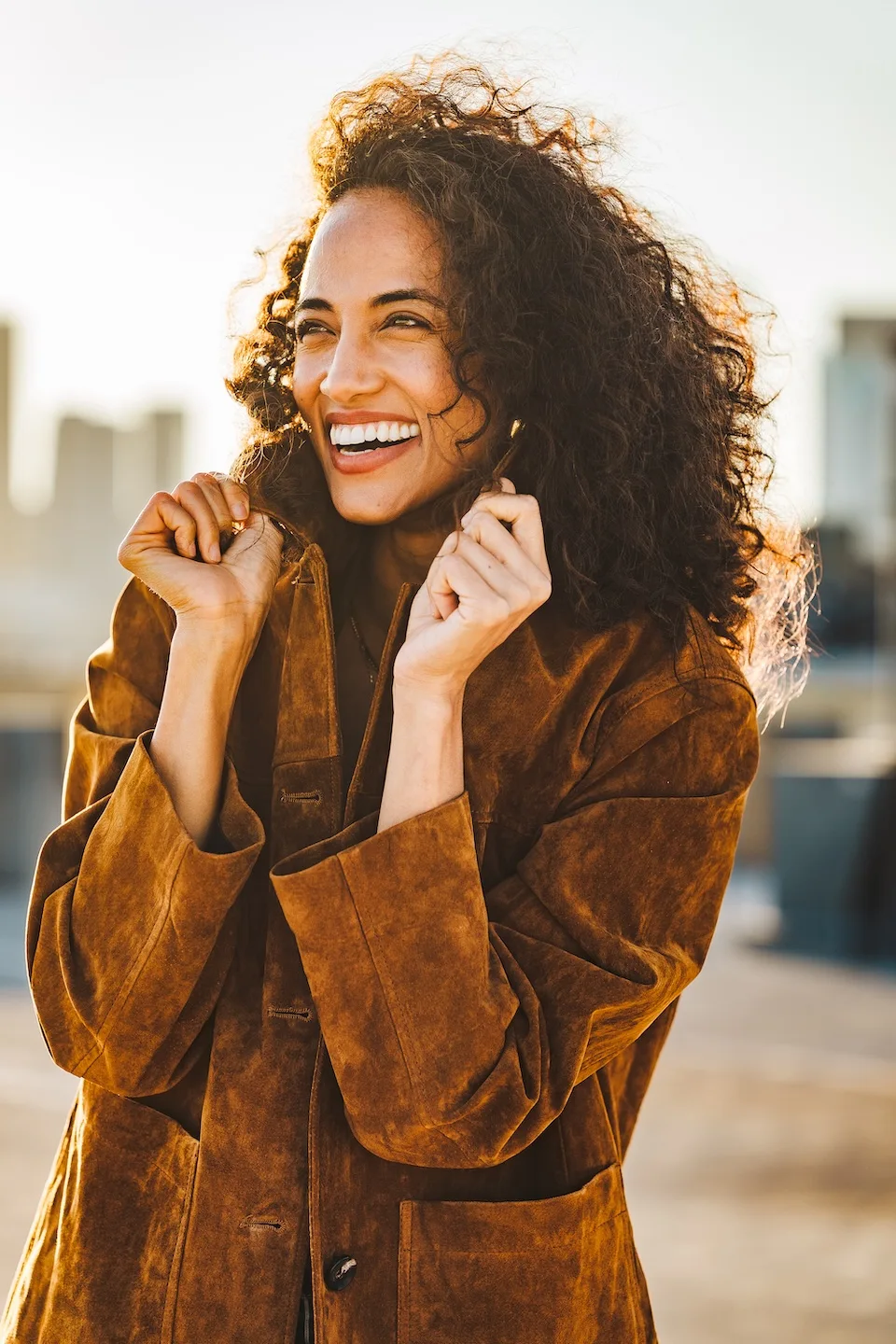
Trauma and intergenerational healing have both been part of your story. How do you hold those experiences without letting them define you?
Life is filled with both lowercase and capital-T trauma, something that has connected humanity across time—hence trauma bonding. I’m no stranger to it, and while it can be a quick way to understand someone, sharing and processing painful experiences can create deep connections. Still, if we define ourselves by trauma, we risk never moving beyond it. If I lived that way, I’d be weighed down and miss out on light and joy. I don’t want to overlook the non-traumas; I believe there’s value in learning from all of life’s experiences. To me, that’s what intergenerational healing means: holding a range of experiences without becoming a victim to them. As Bruce Lee said, I want to be like water and flow through it all. That mindset helps me stay present, process life’s highs and lows in a healthy way, and ultimately pour back into my community.
A lot of women are unlearning who they thought they had to be. What has that process looked like for you?
A large part of that process has come through auditioning. Whenever I tried to be what I thought others wanted, it never led to booking. But when I fully trusted myself, owned my choices, and stopped worrying about how I’d be received—Voilà!—that’s when I booked or came close. This pattern showed me how important it is to stay true to myself, regardless of the outcome.
Does that lesson always stick? Not quite. It’s easy to develop an unhealthy relationship with external validation, especially when booking becomes the ultimate goal. That’s where a good therapist has made a difference. Finding the right one has helped me unlearn who I thought I needed to be. Unlearning isn’t easy, and when I falter as I inevitably do, my therapist helps me build healthier thought patterns and a more honest relationship with myself.
You move between so many roles: actress, writer, mentor, advocate. How do you stay grounded in yourself through all of it?
Somatic therapy is perhaps my favorite tool for staying grounded and in tune with my body. I also love challenging physical movement. These days, I especially enjoy guided heavy weightlifting, though I also love a good hot yoga class. And I never take for granted the grounding effects of walking our dogs—simple and tried and true.
You’ve mentioned intuition as something you trust. How do you know when you’re aligned, and when something feels off?
I feel it in my body. When I am aligned, I can breathe easily and feel a “full body yes,” which is exactly what it sounds like. Your body will tell you if something feels like a full-body yes, and if it is not, then it is clearly a no. Listening to these cues not only honors my body but also strengthens my intuition.
For the woman who is learning to take up space without apology, what would you want her to hold onto in those moments when it feels easier to shrink?
Sometimes it helps to remember that others benefit from seeing me set an example. Shrinking can feel like cocooning for the nervous system—a normal response to perceived stress. But often, stress is just that, perceived. Taking up space can feel like exposing vulnerability, like being bigger than we believe ourselves to be. I’ve seen how stepping beyond my comfort zone and embracing vulnerability can inspire others to do the same. That’s the perspective I’d offer to any woman learning this: our journeys create visible lessons for others. Knowing that others might be empowered by watching you take up space unapologetically can be a powerful motivation.
When you think about your life right now, what does living beautifully look like in your day-to-day?
It looks like I’m accepting myself regardless of whether my skin is imperfect or I feel tired. The days go by so quickly, and I don’t want to look back on my life having hyper-fixated on things I could not control that ultimately didn’t matter in the grand scheme. What I can control is my perspective, and the beauty of life is wherever I choose to see it. The more open I am to seeing it, the more I get to experience that beauty. So living beautifully means being open and present to the beauty in my surrounding community and the humans I have the great pleasure of connecting with in my day-to-day life.